

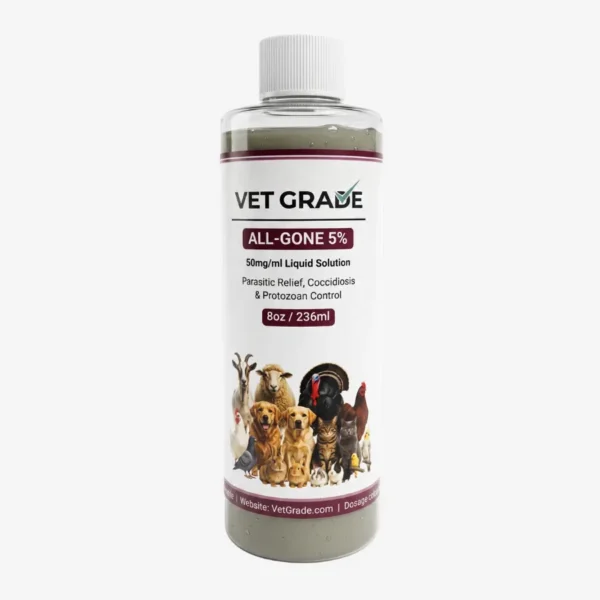
All-Gone Oral Suspension for Pets
$14.95 – $302.95Price range: $14.95 through $302.95
- For Dogs, Cats & Rabbits – A sulfonamide antibiotic formulated for all three species.
- Treats Coccidiosis & Susceptible Bacterial Infections – Clears bacterial enteritis linked to coccidiosis, plus respiratory, urinary, and soft-tissue infections caused by susceptible bacteria.
- Addresses Key Symptoms – Helps with diarrhea (with or without blood or mucus), coughing or nasal discharge, straining to urinate, and wounds or swelling from soft-tissue infection.
- Easy Liquid Dosing – A 5% (50 mg/mL) oral suspension for accurate weight-based dosing with an oral syringe.
- Palatable Flavor Options – Chicken, tuna, apple, vanilla, or unflavored.
- Vetgrade.com’s Top Quality – Every bottle of Vet Grade All-Gone is made for consistent potency you can dose with confidence.

More Products from This Brand
All-Gone Oral Suspension for Pets
$14.95 – $302.95Price range: $14.95 through $302.95
Description
All-Gone Oral Suspension is a 5% oral sulfonamide antibiotic for dogs, cats, and rabbits, formulated as a direct equivalent to Albon (sulfadimethoxine) in both active ingredient and use. It works by blocking a step in the folic acid production process that susceptible bacteria and coccidia need to multiply, which stops the infection from spreading so the animal’s immune system can clear it. Vets reach for it for bacterial enteritis linked to coccidiosis, as well as respiratory, urinary tract, and soft-tissue infections caused by susceptible bacteria. Because it’s a ready-to-use liquid, Vetgrade.com’s All-Gone Solution is easy to dose accurately by weight with an oral syringe.
Animals It’s Used For
Dogs & Cats
FDA-labeled for the treatment of susceptible bacterial infections of the respiratory, urinary/genital, and soft-tissue systems in dogs and cats, and for bacterial enteritis associated with coccidiosis. Veterinarians also commonly use it in cats for coccidiosis itself, even though that specific indication appears on the label for dogs — a widely accepted extension of use in feline practice.
Rabbits
Used off-label — a long-standing, well-established practice in rabbit medicine — for intestinal coccidiosis, which is one of the most common parasitic health problems in young or stressed rabbits, especially in group housing or breeding situations.
Symptoms & Indications
Coccidiosis & Enteric Symptoms
- Diarrhea, sometimes watery or containing mucus or blood
- Poor weight gain or weight loss, especially in young or growing animals
- Reduced appetite
- A pot-bellied appearance or rough coat in heavily affected young rabbits and kittens/puppies
Bacterial Respiratory, Urinary & Soft-Tissue Symptoms (Dogs & Cats)
- Coughing, nasal discharge, or labored breathing
- Straining to urinate, frequent urination, or blood-tinged urine
- Fever, lethargy, or reduced appetite
- Wounds, abscesses, or localized swelling and heat from soft-tissue infection
Important Safety Notes
Sulfa hypersensitivity syndrome. Sulfonamide antibiotics like sulfadimethoxine can occasionally trigger a hypersensitivity reaction, typically 5 to 14 days into treatment, that can include fever, joint pain, skin eruptions, reduced tear production (keratoconjunctivitis sicca, or “dry eye”), and changes in liver enzymes or blood cell counts. This is uncommon but is the reason longer courses should be monitored, and it’s why treatment generally isn’t continued indefinitely without veterinary reassessment.
Keep water intake up. Adequate hydration during treatment helps the kidneys clear the drug normally and reduces the already-low risk of crystal formation in the urinary tract. Make sure treated animals have continuous access to fresh water.
Avoid in pregnant or nursing animals, and in animals with significant liver or kidney disease, or with a known sulfa allergy.
All-Gone Liquid Solution Dosing Chart
Doses below reflect commonly referenced veterinary ranges and are for general informational purposes. Always confirm exact dosing and treatment length with a veterinarian.
| Species | Purpose | Dose | Schedule | mL (5%) |
|---|---|---|---|---|
| Dogs & Cats | Initial (loading) dose | 55 mg/kg (25 mg/lb) | Once, on day 1 | 5 mL per 10 lb |
| Dogs & Cats | Maintenance dose | 27.5 mg/kg (12.5 mg/lb) | Once daily from day 2 onward | 2.5 mL per 10 lb |
| Rabbits | Intestinal coccidiosis | 50 mg/kg (22.7 mg/lb) | Once daily, 5–10 days | ~0.45 mL per lb |
Treatment in dogs and cats is generally continued until about 2 days after symptoms resolve, and courses typically aren’t extended past 14 days without a veterinary recheck, given the hypersensitivity risk noted above. Rabbit coccidiosis protocols sometimes involve a repeat course after a short break, depending on severity — your veterinarian can guide the exact schedule.
Dosing Instructions
- Shake the bottle thoroughly before each use to ensure a completely uniform suspension.
- Weigh the animal (or use a recent known weight) for accurate dosing.
- Using a calibrated oral syringe, measure the exact fluid volume required — remember dogs and cats need a higher first-day dose followed by a lower daily maintenance dose.
- Administer directly into the mouth, or mix thoroughly into a small portion of wet food or a palatable treat that will be consumed immediately.
- Make sure fresh water is available at all times during treatment.
- Complete the full course as directed, even if symptoms improve early, to reduce the chance of relapse.
- Watch for reduced tear production (squinting, dry or red eyes), joint soreness, or lethargy during longer courses, and contact your veterinarian if these appear.
FAQs
Can All-Gone Liquid Solution be used in pregnant or nursing animals?
No — sulfadimethoxine is generally avoided in pregnant or nursing dogs, cats, and rabbits. If treatment is truly necessary during pregnancy or lactation, this should only happen under direct veterinary guidance weighing the risks and benefits.
Is there a withdrawal period for rabbits raised for meat?
Yes, this matters specifically for rabbits (dogs and cats aren’t food-producing animals, so it doesn’t apply to them). Published residue studies on sulfadimethoxine in rabbits support a withdrawal period of around 28 days before slaughter when dosed through drinking water; oral dosing schedules may differ. Because this is an off-label use with limited official guidance, confirm the appropriate withdrawal interval with your veterinarian or FARAD before treating any rabbit intended for meat.
How is All-Gone different from Albon?
It isn’t, in terms of active ingredient or use — All-Gone Liquid Solution is formulated as a direct equivalent to Albon, using the same active ingredient (sulfadimethoxine 5%) at the same concentration, for the same indications. It’s simply Vetgrade.com’s version of the same trusted formula.
Why does the dose change after the first day?
The higher first-day “loading dose” quickly builds an effective concentration of the drug in the body. Once that level is established, the lower daily “maintenance dose” is enough to keep it there, which is why the label calls for a bigger dose on day 1 followed by a smaller dose every day after.
My pet’s eyes look dry or red after being on this for a couple of weeks — is that related?
Possibly. Reduced tear production is a recognized, if uncommon, side effect of sulfonamide antibiotics, more often seen with longer treatment courses. Contact your veterinarian if you notice dryness, redness, squinting, or eye discharge during or after treatment — this is worth having checked rather than waiting it out.
My vet prescribed this for my cat’s coccidia even though the label mentions dogs — is that correct?
Yes, this is standard veterinary practice. The FDA label for coccidiosis-associated enteritis specifically names dogs, but sulfadimethoxine is also commonly and effectively used off-label for coccidiosis in cats, based on how the drug works and extensive clinical experience — your veterinarian is following accepted practice, not making an error.
How should it be stored, and what’s the shelf life?
Store at room temperature, out of direct sunlight, tightly capped. Shake before each use. Discard if the suspension changes color, smells off, or is past the expiration date on the bottle.
Sources
- ALBON (sulfadimethoxine) Suspension — Official FDA Label, DailyMed
- Sulfadimethoxine (Albon) — Veterinary Partner, VIN
- Parasitic Diseases of Rabbits — Merck Veterinary Manual
- Idiosyncratic toxicity associated with potentiated sulfonamides in the dog — Journal of Veterinary Pharmacology and Therapeutics
Doses reflect commonly referenced veterinary ranges and are for general informational purposes. Always confirm exact dosing and treatment length with a veterinarian.
Reviews
There are no reviews yet.