

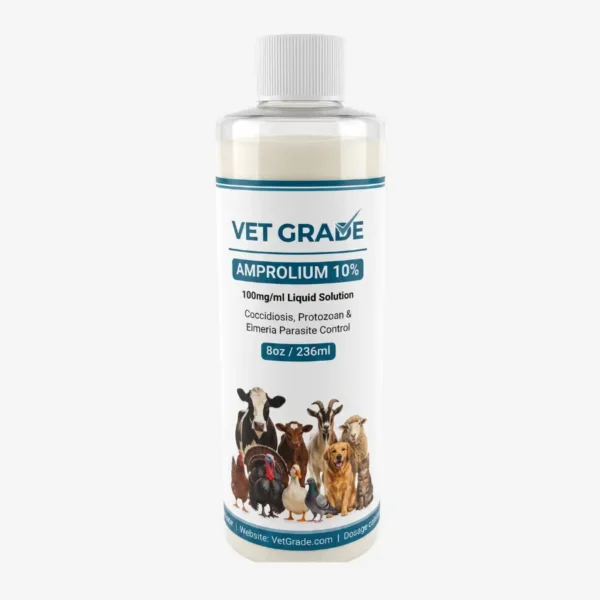
Vet Grade Amprolium Liquid Solution
$5.95 – $85.95Price range: $5.95 through $85.95
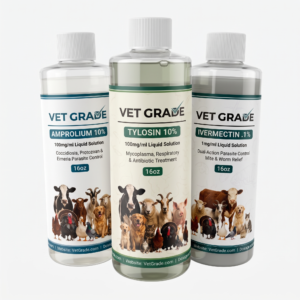
- Multi-Species Use – Formulated for poultry & game birds, cattle & calves, goats & sheep, swine, dogs, and cats.
- Targets Coccidiosis – Treats and helps prevent intestinal coccidiosis caused by Eimeria and Cystoisospora species, with a strong safety margin and minimal impact on egg production in layers.
- Addresses Key Symptoms – Helps manage watery or bloody diarrhea (scours), lethargy, poor appetite, weight loss, and dehydration.
- Easy Liquid Dosing – A 10% oral solution for accurate weight-based dosing with an oral syringe, or mixed into drinking water for flocks and herds.
- Palatable Flavor Options – Chicken, tuna, apple, vanilla, or unflavored to make dosing easier across species.
- Vetgrade.com’s Top Quality – Every bottle of Vet Grade Amprolium is made for consistent potency you can dose with confidence.

More Products from This Brand
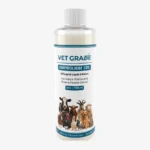
Vet Grade Amprolium Liquid Solution
$5.95 – $85.95Price range: $5.95 through $85.95
Description
Amprolium Liquid Solution Overview
Amprolium Liquid Solution is a 10% oral coccidiostat that treats and helps prevent coccidiosis in poultry, cattle, goats, sheep, swine, dogs, and cats. It works differently than other anticoccidials: amprolium is a thiamine (vitamin B1) look-alike, and the coccidia parasite mistakes it for real thiamine, absorbs it, and effectively starves itself of the nutrient it needs to reproduce. This same mechanism is why amprolium has such a long, well-established safety record in poultry, including layers, since it doesn’t affect egg production the way some other coccidiostats can. Because it’s a ready-to-use liquid, Vetgrade.com’s Amprolium Solution is easy to dose accurately by weight with an oral syringe, or mixed into drinking water for flock and herd treatment.
Animals It’s Used For
Poultry & Birds (Primary Use)
Chickens (layers, broilers, pullets) — treats E. tenella, E. acervulina, E. necatrix, E. maxima, and E. brunetti. Turkeys — treats E. adenoeides and E. meleagrimitis. Also used in game birds and waterfowl including pheasants, quail, ducks, geese, and pigeons.
Cattle & Calves
Prevents and treats outbreak scours caused by Eimeria bovis and Eimeria zuernii, particularly in young, stress-exposed calves.
Small Ruminants (Goats & Sheep)
Frequently used in herd health management, often as a flock/herd water treatment, to prevent and treat acute coccidial scours brought on by weaning, overcrowding, or weather stress.
Swine
Used off-label or via prescription in piglets and growing pigs to control coccidial diarrhea caused by Eimeria and Cystoisospora species during early nursing or post-weaning stages.
Dogs & Cats
Veterinarians and shelters sometimes use amprolium off-label to treat heavy Cystoisospora (Isospora) infestations in puppies and kittens, particularly when other coccidiostats aren’t available.
Symptoms & Indications
Coccidiosis Symptoms
- Watery or bloody diarrhea (scours)
- Lethargy and weakness
- Reduced appetite and weight loss or poor growth
- Dehydration
- Ruffled feathers, pale comb, or hunched posture in poultry; pasty vent in young chicks
Amprolium Liquid Solution Dosing Chart
Doses below reflect commonly referenced veterinary ranges and are for general informational purposes. Always confirm exact dosing and treatment length with a veterinarian.
Poultry & Game Birds
| Purpose | Dose | Schedule | Water Medication (10%) |
|---|---|---|---|
| Treatment | 25–73 mg/kg (chickens), 14–60 mg/kg (turkeys) | Once daily, 5–7 days | ~9 mL per gallon of drinking water |
| Prevention / follow-up | Lower maintenance level | 1–2 weeks | ~2.3 mL per gallon of drinking water |
Cattle & Calves
| Purpose | Dose | Schedule | mL per 10 lb body weight (10%) |
|---|---|---|---|
| Treatment | 10 mg/kg (4.5 mg/lb) | Once daily, 5 days | 0.45 mL |
| Prevention | 5 mg/kg (2.3 mg/lb) | Once daily, 21 days | 0.23 mL |
Goats & Sheep
| Species | Purpose | Dose | Schedule | mL per 10 lb body weight (10%) |
|---|---|---|---|---|
| Goats | General/oral drench | ~10 mg/kg (4.5 mg/lb) | Once daily, 5 days | 0.45 mL |
| Sheep | Treatment (extra-label) | 50–55 mg/kg (23–25 mg/lb) | Once daily, 5 days | 2.27–2.5 mL |
| Sheep | Prevention (extra-label) | 15 mg/kg (6.8 mg/lb) | Once daily, 19–21 days | 0.68 mL |
Swine
| Purpose | Dose | Schedule | mL per 10 lb body weight (10%) |
|---|---|---|---|
| Individual treatment | 10–25 mg/kg (4.5–11.4 mg/lb) | Once daily, 4–5 days | 0.45–1.14 mL |
Dogs
| Dose | Schedule | mL per 10 lb body weight (10%) |
|---|---|---|
| 100–200 mg/kg (45.5–90.9 mg/lb) in food or water | Once daily, up to 7 days (do not exceed 12 days) | 4.5–9.1 mL |
Cats
| Dose | Schedule | mL per 10 lb body weight (10%) |
|---|---|---|
| 60–100 mg/kg (27.3–45.5 mg/lb) | Once daily, up to 7 days (do not exceed 12 days) | 2.73–4.55 mL |
Dog and cat doses of amprolium run notably higher (in mg/kg) than other coccidiostats — this is expected for this medication and not a sign of a dosing error, but treatment length should never exceed the vet-recommended maximum.
Dosing Instructions
- Shake the bottle thoroughly before use.
- For individual dosing, weigh the animal and measure the exact fluid volume using an oral syringe, then administer directly into the mouth.
- For herd or flock treatment, mix the required amount thoroughly into fresh daily drinking water, and remove access to any other water source during the treatment period.
- Amprolium should be given in either food or water, not both, for the treatment period.
- Do not give concurrent thiamine (vitamin B1) supplements or B1-rich feeds during the treatment cycle, as this can counter the medication’s effectiveness.
- Do not exceed the labeled or vet-recommended treatment duration.
- Ensure continuous access to fresh drinking water outside of the medicated water source (or immediately after a flock/herd water-medication period ends) to support recovery from fluid loss.
Important Safety Note: Thiamine (Vitamin B1)
Because amprolium works by blocking thiamine uptake in the parasite, it can also reduce thiamine availability in the treated animal itself if used at high doses or for longer than labeled. This can lead to a real thiamine deficiency in the animal, which shows up differently from coccidiosis and is unrelated to the original infection — watch for stargazing or wry neck (twisted neck) in birds, or incoordination, tremors, and disorientation in cattle, goats, and sheep (part of a condition called polioencephalomalacia). To avoid this:
- Don’t give additional thiamine (vitamin B1) supplements or B1-rich feeds during treatment.
- Don’t exceed the labeled treatment duration (generally capped around 7–12 days depending on species).
- After treatment ends, a standard thiamine/B-vitamin supplement can help restore normal levels if recommended by your veterinarian.
FAQs
Can amprolium be used in pregnant animals? Data on use during pregnancy is limited across species, and drug labels vary in their guidance. Given the mixed information, treating a pregnant or nursing animal should be done only under direct veterinary supervision.
Are there withdrawal periods for meat, milk, or eggs? Yes, though they vary by species, product, and dosing protocol. Some labeled poultry water-medication protocols carry a 7-day meat withdrawal, while properly labeled medicated feed use often has no egg withdrawal requirement. Cattle protocols range from as little as 24 hours to several days for meat, with milk withdrawal sometimes listed as 0 days for specific labeled products. Because ranges vary this much, always check your specific product label or ask your veterinarian, especially for goats, sheep, and swine where extra-label use is common and withdrawal data is less standardized.
Why can’t I give my animal a vitamin supplement while treating with amprolium? Amprolium works by mimicking thiamine (vitamin B1) so the coccidia parasite absorbs it instead of real thiamine and can’t reproduce. Adding extra B1 during treatment gives the parasite (and the animal) more real thiamine to use instead, which can reduce how well the medication works.
Is it normal for my chicken/goat/calf to still have loose stool a day or two into treatment? Yes, mild improvement typically takes 24–72 hours, and full symptom resolution can take the length of the treatment course. Contact your vet if diarrhea is severe, bloody, or doesn’t improve within a few days.
How do I know if it’s coccidiosis or a thiamine problem? Coccidiosis causes GI symptoms — diarrhea, lethargy, poor appetite. A thiamine problem from prolonged or excessive amprolium use looks different: stargazing or a twisted neck in birds, or incoordination and tremors in cattle, goats, and sheep. If you see these neurological signs, stop treatment and contact your veterinarian promptly.
Can I treat my whole flock or herd at once? Yes — water medication is the standard approach for poultry, cattle, goats, and sheep in group settings, and is often more practical and consistent than dosing each animal individually.
How should it be stored, and what’s the shelf life? Store at room temperature, out of direct sunlight, tightly capped. Shake before each use. Discard if the solution changes color, smells off, or is past the expiration date on the bottle.
Note:
Doses reflect commonly referenced veterinary ranges and are for general informational purposes. Always confirm exact dosing and treatment length with a veterinarian.
Reviews
There are no reviews yet.