

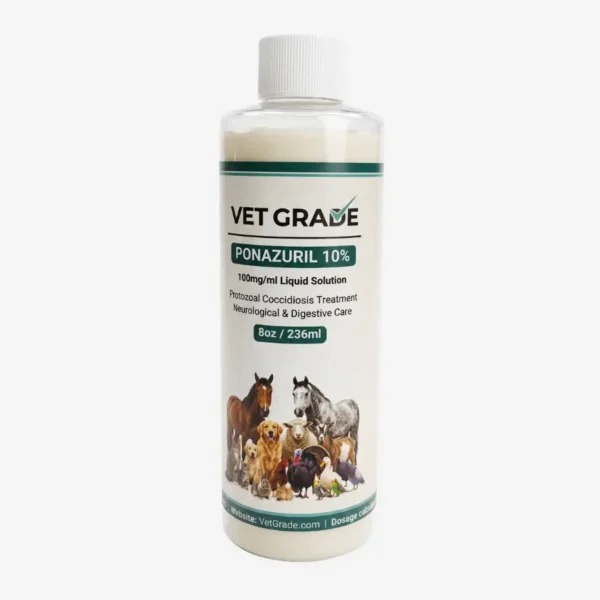
Ponazuril Liquid Solution
$19.95 – $502.95Price range: $19.95 through $502.95
- Multi-Species Use – Formulated for horses, dogs, cats, rabbits, goats, and sheep.
- Targets Two Key Conditions – Supports treatment of Equine Protozoal Myeloencephalitis (EPM) in horses and coccidiosis (Eimeria/Isospora) in dogs, cats, rabbits, goats, and sheep.
- Addresses Key Symptoms – Helps manage diarrhea, lethargy, poor appetite, weight loss, dehydration, and abdominal discomfort from coccidiosis, plus the incoordination and weakness seen with EPM in horses.
- Easy Liquid Dosing – A 10% oral solution for simple, accurate weight-based dosing with an oral syringe — no pills or paste to measure out.
- Palatable Flavor Options – Chicken, tuna, apple, vanilla, or unflavored to make dosing easier on sick or picky animals.
- Vetgrade.com’s Top Quality – Every bottle of Vet Grade Ponazuril is made for consistent potency you can dose with confidence.

More Products from This Brand
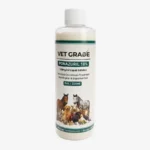
Ponazuril Liquid Solution
$19.95 – $502.95Price range: $19.95 through $502.95
Description
Vet Grade Ponazuril Liquid Solution is a 10% oral antiprotozoal used mainly to treat Equine Protozoal Myeloencephalitis (EPM) in horses and coccidiosis in dogs, cats, rabbits, goats, and sheep. It works by stopping the parasite causing the infection from multiplying, so the body can clear it and start healing. Some veterinarians also use it off-label in extended protocols for toxoplasmosis in cats and dogs, though this use has less clinical research behind it than its coccidiosis and EPM uses. Because it’s a ready-to-use liquid, Vetgrade.com’s Ponazuril Solution is easy to dose accurately by weight with an oral syringe.
Animals It’s Used For:
Horses, dogs, cats, rabbits, goats, and sheep. Horses are the only FDA-labeled use (as the active ingredient in the approved product Marquis); use in dogs, cats, rabbits, goats, and sheep is standard extra-label veterinary practice.
Symptoms & Indications:
Coccidiosis Symptoms — Dogs, Cats, Rabbits, Goats & Sheep
- Diarrhea (sometimes bloody)
- Lethargy or weakness
- Poor appetite or weight loss
- Dehydration
- Abdominal discomfort or bloating
EPM Symptoms — Horses
- Incoordination or a “wobbly,” uncoordinated gait (ataxia)
- Weakness, especially in the hindquarters
- Muscle atrophy, often asymmetric
- Facial drooping, head tilt, or difficulty swallowing
- Stumbling or worsening symptoms on inclines or uneven ground
Ponazuril Liquid Solution Dosing Chart
Coccidiosis Dosing — Dogs, Cats, Rabbits, Goats & Sheep
| Species | Typical Dose | Schedule | mL per 10 lb body weight (10%) |
|---|---|---|---|
| Dogs & Cats | 10–15 mg/kg (5–7 mg/lb) | Once daily, 1–3 days | 0.45–0.68 mL |
| Rabbits | ~20 mg/kg (9 mg/lb) | Once daily, 7 days | 0.91 mL |
| Goats & Sheep | 10–20 mg/kg (5–9 mg/lb) | Once daily, 3–5 days | 0.45–0.91 mL |
Shelter / Heavy Infection Protocol (Dogs & Cats)
For higher parasite loads, some shelter and rescue protocols use 50 mg/kg once daily for 3–5 days (about 2.27 mL per 10 lb, once daily). This higher-dose protocol should only be used under veterinary guidance.
EPM Dosing — Horses
| Dose | Schedule | mL per 100 lb body weight (10%) |
|---|---|---|
| 5 mg/kg (2.3 mg/lb) | Once daily for 28 days | 2.27 mL |
Dosing Instructions
- Weigh the animal (or use a recent known weight) for accurate dosing — never estimate by eye.
- Draw up the correct volume using an oral syringe sized to the dose (1mL, 3mL, or 5mL work well for most animals; larger syringes are useful for horses).
- Administer directly into the mouth (along the cheek pouch) or mix into a small amount of wet food.
- Shake well before each use.
- For multi-day or multi-week protocols, dose at the same time each day and complete the full course, even if symptoms improve early — this matters especially for the 28-day EPM protocol in horses.
- Monitor stool consistency, appetite, and hydration for coccidiosis cases, or gait and coordination for EPM cases, throughout treatment.
- In group settings (catteries, kennels, barns), consider treating all in-contact animals and disinfecting the environment to reduce reinfection risk.
FAQs
Can ponazuril be used in pregnant animals? Data is limited across all species. It has been used clinically in some pregnant mares without obvious problems, but safety hasn’t been formally studied in pregnant horses, dogs, or cats, and one toxicity study noted uterine swelling in mares given high doses over 30 days. Use in a pregnant or nursing animal should only happen under direct veterinary guidance.
Are there withdrawal periods for meat, milk, or eggs? Yes, and they vary by species since most uses outside of horses are extra-label. Reported figures include roughly a 42-day milk withdrawal in goats and around 33 days for meat withdrawal in pigs; sheep and horse withdrawal periods are less consistently documented. Because ponazuril isn’t labeled for most food-producing species, check with your veterinarian or FARAD (Food Animal Residue Avoidance Databank) before treating any animal intended for meat, milk, or eggs.
What’s the difference between ponazuril and toltrazuril? Ponazuril (toltrazuril sulfone) is the active compound the body produces after metabolizing toltrazuril. Some products are sold as ponazuril directly, giving faster, more predictable blood levels, while toltrazuril needs to convert internally first. Both target the same parasites.
How long until I see improvement? For coccidiosis, firmer stools and better energy are commonly reported within 24–72 hours. EPM improvement in horses is much slower and is typically assessed in weeks, since the standard protocol runs a full 28 days.
Is it normal for symptoms to continue for a day or two after starting treatment? For coccidiosis, mild diarrhea or reduced appetite can persist for 24–48 hours as the parasites die off — this is usually part of the process, not a treatment failure. Contact your vet if diarrhea is severe, bloody, or lasts more than 3 days. For EPM, gradual improvement (not sudden resolution) is the norm.
Can it actually treat toxoplasmosis in cats? Research in animal models shows strong activity against Toxoplasma gondii, and some veterinarians use extended, off-label ponazuril protocols (often around 28 days) for cats or dogs with confirmed toxoplasmosis. However, clinical evidence in cats is still limited mostly to case reports, so this should be a decision made with your veterinarian rather than a self-directed treatment.
Does my horse need a confirmed EPM diagnosis before starting treatment? Most veterinarians recommend testing (bloodwork and/or spinal fluid analysis) before committing to the full 28-day protocol, since EPM symptoms can overlap with other neurological or musculoskeletal conditions. Treating based on symptoms alone can delay finding the real cause if it isn’t EPM.
How should it be stored, and what’s the shelf life? Store at room temperature, out of direct sunlight, tightly capped. Shake before each use. Discard if the solution changes color, smells off, or is past the expiration date on the bottle.
Reviews
There are no reviews yet.