

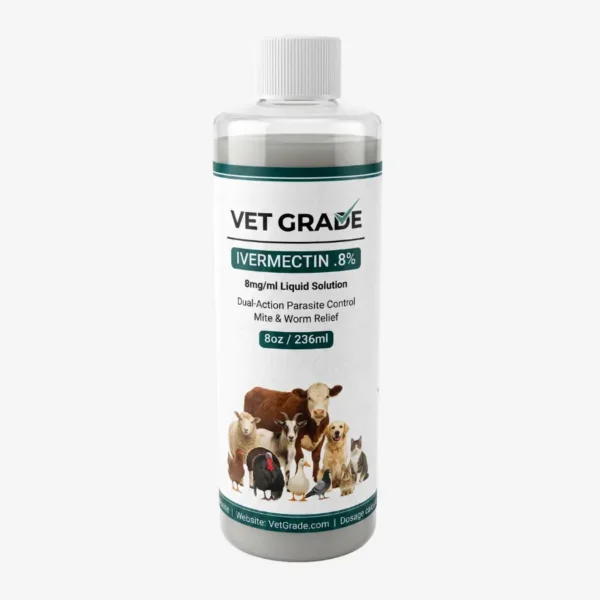
Ivermectin Liquid Solution
$10.95 – $172.95Price range: $10.95 through $172.95
- Built for Cattle, Sheep & Goats – Not labeled for dogs, cats, or horses (see why below).
- Clears Internal and External Parasites Together – An “endectocide” that treats GI roundworms and lungworms while also controlling lice, mange mites, and cattle grubs — most dewormers only handle one side of that.
- Addresses Key Symptoms – Helps with diarrhea, weight loss, coughing, plus scratching, hair loss, and scabby or thickened skin from external parasites.
- Easy Liquid Dosing – Available in 0.1% and 0.8% concentrations for accurate weight-based dosing with an oral syringe.
- Palatable Flavor Options – Chicken, tuna, apple, vanilla, or unflavored.
- Vetgrade.com’s Top Quality – Every bottle of Vet Grade Ivermectin is made for consistent potency you can dose with confidence.

More Products from This Brand
Ivermectin Liquid Solution
$10.95 – $172.95Price range: $10.95 through $172.95
Description
Ivermectin Liquid Solution is an oral endectocide for cattle, sheep, and goats, available in 0.1% and 0.8% concentrations. “Endectocide” means it works on both ends of the parasite problem at once — internal parasites like GI roundworms and lungworms, and external parasites like lice, mange mites, and cattle grubs — through a single mechanism that overstimulates the parasite’s nervous system, causing paralysis and death. Because it’s a ready-to-use liquid, Vetgrade.com’s Ivermectin Solution is easy to dose accurately by weight with an oral syringe.
Animals It’s Used For
Cattle
Controls GI roundworms, lungworms, sucking lice, mange mites (Psoroptes, Chorioptes), and cattle grubs (Hypoderma bovis and H. lineatum).
Sheep
Controls GI roundworms and lice; also the standard treatment for sheep scab (Psoroptes ovis), a serious and highly contagious mange mite infestation in sheep flocks.
Goats
Used for similar internal and external parasites as sheep, though this is standard extra-label veterinary use in the US — no ivermectin product is currently labeled specifically for goats.
Why Not Dogs or Cats?
This product isn’t intended for dogs or cats. Ivermectin can cause severe, sometimes fatal neurotoxicity in dogs with a specific genetic mutation (MDR1/ABCB1) that’s especially common in collies and related herding breeds (roughly 55–70% of collies carry it) — at the doses used for mange treatment in other species, affected dogs can react to a small fraction of what a normal dog would tolerate. Livestock-strength ivermectin products like this one should never be given to a dog or cat without a veterinarian’s specific guidance.
A Note on Horses
Horses aren’t included in this product’s species list. Ivermectin is commonly used in horses elsewhere in veterinary practice, but this particular formulation is built and dosed for cattle, sheep, and goats.
Symptoms & Indications
Internal Parasite Symptoms
- Diarrhea or loose stool
- Weight loss or poor growth
- Coughing (can indicate lungworm)
- Rough coat and general unthriftiness
External Parasite Symptoms
- Scratching, rubbing, or biting at the skin and coat
- Hair loss, scabby or thickened skin, or visible crusting (mange)
- Visible lice or lice eggs (nits) in the coat
- In cattle specifically, swellings along the back (grub/warble stage of Hypoderma)
- In sheep specifically, intense rubbing, wool loss, and skin thickening consistent with sheep scab — a reportable, highly contagious condition in some regions
Important Safety Notes
Extended withdrawal periods. Ivermectin stays in the body longer than many other parasiticides, and meat withdrawal periods are correspondingly longer — commonly weeks rather than days. It also is not approved for use in animals producing milk for human consumption, and no reliable milk withdrawal time has been established. See the FAQ below for specifics.
Demodectic mange response can be inconsistent. Ivermectin has strong, well-established efficacy against sarcoptic and psoroptic mange mites (including sheep scab). Its effectiveness against demodectic mange specifically tends to be less consistent across species, since Demodex mites live deep in hair follicles where the drug penetrates less reliably — a veterinarian may recommend a different approach or a longer course if Demodex is confirmed.
Never use in dogs or cats without specific veterinary direction, for the MDR1 reasons above.
Ivermectin Liquid Solution Dosing Chart
Doses below reflect commonly referenced veterinary ranges and are for general informational purposes. Always confirm exact dosing and treatment length with a veterinarian.
| Species | Purpose | Dose | Schedule | mL per 100 lb (cattle) / per 10 lb (sheep & goats) |
|---|---|---|---|---|
| Cattle | Internal parasites, lice, grubs, general mange | 0.2 mg/kg (200 mcg/kg) | Single dose | 0.1%: 9.1 mL per 100 lb / 0.8%: 1.14 mL per 100 lb |
| Sheep | Internal parasites and lice | 0.2 mg/kg (200 mcg/kg) | Single dose | 0.1%: 0.91 mL per 10 lb / 0.8%: 0.11 mL per 10 lb |
| Sheep | Sheep scab (Psoroptes ovis) | 0.2 mg/kg (200 mcg/kg) | Two doses, 7 days apart | 0.1%: 0.91 mL per 10 lb / 0.8%: 0.11 mL per 10 lb, each dose |
| Goats | Internal and external parasites (extra-label) | 0.2 mg/kg (200 mcg/kg) | Single dose | 0.1%: 0.91 mL per 10 lb / 0.8%: 0.11 mL per 10 lb |
Dosing Instructions
- Shake the bottle thoroughly before each use to ensure a completely uniform solution.
- Weigh the animal (or use a recent known weight) for accurate dosing.
- Using a calibrated oral syringe, measure the exact fluid volume required.
- Administer directly into the side of the mouth, or mix thoroughly into feed or a small palatable portion that will be consumed immediately.
- For sheep scab specifically, don’t skip the second dose 7 days after the first — a single dose won’t reliably clear the infestation.
- Isolate and treat all in-contact animals for mange or lice outbreaks, since these spread easily within a herd or flock.
- Confirm meat and (if relevant) milk withdrawal timing with your veterinarian before treating any animal headed for market or a dairy operation.
FAQs
Can ivermectin be used in pregnant animals?
Generally yes — ivermectin has a well-established safety record in pregnant cattle, sheep, and goats at labeled doses, and claims linking it to abortion in ruminants are not well substantiated in the literature. That said, always confirm with your veterinarian for your specific situation, especially in goats where use remains extra-label.
Are there withdrawal periods for meat or milk?
Yes, and they’re longer than most other dewormers in our lineup. Commonly cited figures include roughly 35 days meat withdrawal for cattle, 14 days for sheep (oral drench), and 11–35 days for goats depending on the route of administration. Ivermectin is not approved for use in dairy animals producing milk for human consumption, and no dependable milk withdrawal period has been established — it generally should not be used in goats or cattle currently being milked for consumption. Always check your specific product label and confirm with your veterinarian or FARAD before treating a food-producing animal.
Can I give this to my dog or cat if they have mange or worms?
No — this product isn’t labeled or dosed for dogs or cats, and livestock-strength ivermectin carries a real risk of severe neurotoxicity in dogs with the MDR1 mutation (common in collies and related breeds), even at doses well tolerated by other dogs. Use a dog- or cat-specific product under veterinary guidance instead.
Will this clear up my animal’s mange completely?
It depends on the type. Sarcoptic and psoroptic mange (including sheep scab) respond well and predictably to ivermectin. Demodectic mange is less consistent — the mites live deep in hair follicles, so response can be partial or slower, and your veterinarian may recommend a longer course or a different treatment if Demodex is confirmed by skin scraping.
Does one dose take care of sheep scab?
No — sheep scab specifically requires two doses, 7 days apart, at the same dose rate. A single dose can knock back the infestation without fully clearing it, which risks the mites rebounding and spreading further.
How fast will I see improvement?
Internal parasite symptoms (diarrhea, appetite) often improve within a few days. External parasite issues like lice and mange take longer to visibly resolve as the skin heals and the coat regrows — expect visible improvement over 1–2 weeks, longer for more severe mange cases.
How should it be stored, and what’s the shelf life?
Store at room temperature, out of direct sunlight, tightly capped. Shake before each use. Discard if the solution changes color, smells off, or is past the expiration date on the bottle.
Note:
Doses reflect commonly referenced veterinary ranges and are for general informational purposes. Always confirm exact dosing and treatment length with a veterinarian.
Reviews
There are no reviews yet.