

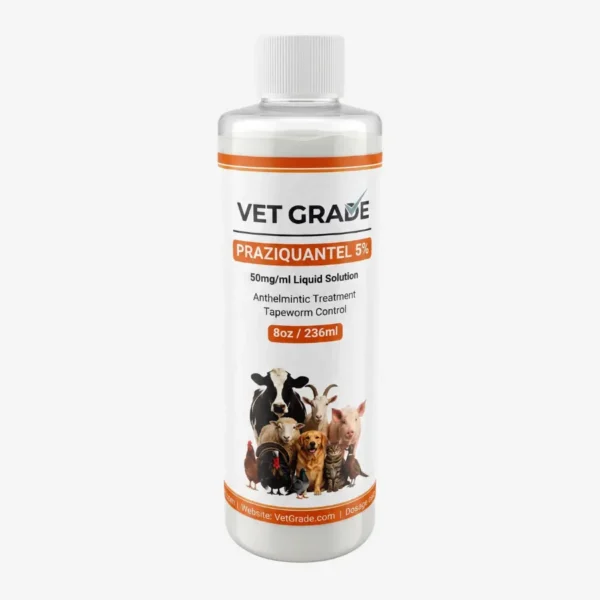
Praziquantel Liquid Solution
$69.95 – $1,405.00Price range: $69.95 through $1,405.00
- Multi-Species Use – Formulated for horses, dogs, cats, pigs/swine, goats, and sheep.
- Targets Tapeworms Specifically – A cestocide, not a roundworm or coccidia treatment — clears Dipylidium, Taenia, Echinococcus, Anoplocephala, and Moniezia species depending on host.
- Addresses Key Symptoms – Helps with rice-like segments in stool or fur, scooting, mild diarrhea or colic, dull coat, and poor weight gain — though many infected animals show no symptoms at all.
- Easy Liquid Dosing – A 5% oral solution for accurate weight-based dosing with an oral syringe.
- Palatable Flavor Options – Chicken, tuna, apple, vanilla, or unflavored for easier at-home dosing.
- Vetgrade.com’s Top Quality – Every bottle of Vet Grade Praziquantel is made for consistent potency you can dose with confidence.

More Products from This Brand
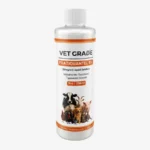
Praziquantel Liquid Solution
$69.95 – $1,405.00Price range: $69.95 through $1,405.00
Description
Praziquantel Liquid Solution is a 5% oral cestocide — a dewormer that targets tapeworms specifically, not roundworms, hookworms, or coccidia. It works by damaging the tapeworm’s outer surface (tegument), which lets calcium flood into the worm’s body; the worm loses muscle control, detaches from the intestinal wall, and is broken down and digested rather than passed out whole. This is why owners often don’t see visible worms in the stool after treatment even when it worked. Because it’s a ready-to-use liquid, Vetgrade.com’s Praziquantel Solution is easy to dose accurately by weight with an oral syringe.
Animals It’s Used For
Dogs & Cats
The most common use case — clears Dipylidium caninum (the flea tapeworm), Taenia species, and Echinococcus species. Not for puppies under 4 weeks or kittens under 6 weeks of age.
Horses
Treats Anoplocephala perfoliata, the tapeworm most commonly affecting horses, often as part of a combined deworming strategy alongside other actives.
Goats & Sheep
Used against Moniezia tapeworm species and, in some documented cases, Taenia multiceps (coenurosis). Praziquantel is a less routine choice for small ruminants in typical US practice — work with your veterinarian to confirm it’s the right tool for the tapeworm species involved.
Pigs / Swine
Praziquantel has documented activity against Taenia solium cysts (the cause of swine cysticercosis, a zoonotic concern in regions where this parasite is endemic). This is a more specialized, vet-directed use than a routine farm deworming and isn’t a standard part of typical US commercial swine parasite control programs.
Symptoms & Indications
Signs of Tapeworm Infection
- Small, rice-like segments (proglottids) in the stool or stuck to fur near the tail
- Scooting or rear-end irritation
- Mild diarrhea, colic (in horses), or an upset stomach
- Dull coat, poor weight gain, or general unthriftiness
- Occasionally vomiting a visible worm segment
Many animals with a light tapeworm burden show no outward symptoms at all — visible segments are often the only sign, which is why regular deworming schedules matter even without obvious illness.
Important Note: Reinfection Prevention
Because tapeworms are transmitted through an intermediate host — fleas for Dipylidium in dogs and cats, or ingestion of infected prey/rodents and carrier insects for other tapeworm species — treating the animal alone often isn’t enough. Pair treatment with flea control (for pets) or rodent/prey exposure management to prevent the cycle from restarting shortly after dosing.
Praziquantel Liquid Solution Dosing Chart
Doses below reflect commonly referenced veterinary ranges and are for general informational purposes. Always confirm exact dosing and treatment length with a veterinarian.
Dogs & Cats
| Dose | Schedule | mL per 10 lb body weight (5%) |
|---|---|---|
| 5 mg/kg (2.3 mg/lb) | Single dose | 0.45 mL |
Not recommended for puppies under 4 weeks or kittens under 6 weeks old. If treating a nursing mother, avoid nursing for 4 days after dosing.
Horses
| Dose | Schedule | mL per 100 lb body weight (5%) |
|---|---|---|
| 1–2.5 mg/kg (0.45–1.1 mg/lb) | Single dose | 0.91–2.27 mL |
Goats & Sheep
| Dose | Schedule | mL per 10 lb body weight (5%) |
|---|---|---|
| ~18.75 mg/kg (8.5 mg/lb) | Single dose | 1.7 mL |
Some historical protocols for clinically affected lambs used much higher doses (50–100 mg/kg) — this should only be done under direct veterinary supervision, and goat-specific dosing data is limited, so confirm with your vet.
Pigs / Swine
| Dose | Schedule | mL per 10 lb body weight (5%) |
|---|---|---|
| ~10 mg/kg (4.5 mg/lb) | Single dose | 0.91 mL |
This use is specialized and should be guided by a veterinarian, particularly given the public health considerations around Taenia solium.
Dosing Instructions
- Shake the bottle thoroughly before each use to ensure a perfectly uniform distribution.
- Weigh the animal (or use a recent known weight) for accurate dosing.
- Using a calibrated oral syringe, draw up the exact required liquid volume.
- Introduce the liquid gently into the side of the mouth for immediate swallowing, or mix it thoroughly into a small, irresistible portion of wet food or a liquid treat that will be consumed entirely right away.
- Treat the animal’s environment for fleas, or limit access to wild rodents and raw/undercooked meat, at the same time to block immediate reinfection.
- Don’t be alarmed if you don’t see whole worms in the stool afterward — praziquantel typically breaks the tapeworm down internally rather than expelling it intact.
FAQs
Can praziquantel be used in pregnant animals? Praziquantel alone (not combination products with other active ingredients) is generally considered safe in pregnant dogs and cats, and has been tested in breeding and pregnant dogs without adverse effects. If treating a nursing mother, avoid letting her nurse for about 4 days after dosing. Data for pregnant horses, goats, sheep, and swine is more limited, so veterinary guidance is recommended for those species.
Are there withdrawal periods for meat or milk? Yes, and they vary widely by species, product, and country. Horses are generally not intended for human consumption in the US regardless of treatment; combination products (praziquantel plus other actives) have carried withdrawal periods around 35 days for meat in some formulations. Swine withdrawal is sometimes cited around 1 day in certain approved products, but this varies by formulation. Sheep and goat withdrawal data is limited since praziquantel isn’t a routine, widely labeled product for those species. Always check your specific product label and consult your veterinarian or FARAD before treating any food-producing animal.
Why didn’t I see any worms in my pet’s stool after treatment? That’s normal and doesn’t mean the treatment failed. Praziquantel typically causes the tapeworm to break down and be digested internally rather than pass out whole, so an absence of visible worms afterward is expected, not a red flag.
My pet was treated, but the rice-like segments came back — did the medication not work? Usually this means reinfection, not treatment failure. If fleas are still present (for Dipylidium) or your pet has access to prey, rodents, or raw meat (for other tapeworm species), the cycle can restart within weeks even after a fully effective dose. Ongoing flea control and limiting hunting/scavenging access are key to breaking the cycle.
Is it safe for young puppies and kittens? Praziquantel is not recommended for puppies under 4 weeks or kittens under 6 weeks of age. Talk to your veterinarian about the right time to start a deworming schedule for very young animals.
Does this treat roundworms and hookworms too? No — praziquantel is a tapeworm-specific dewormer. If roundworms, hookworms, or other nematodes are also a concern, a separate or combination product targeting those parasites is needed alongside it.
How should it be stored, and what’s the shelf life? Store at room temperature, out of direct sunlight, tightly capped. Shake before each use. Discard if the solution changes color, smells off, or is past the expiration date on the bottle.
Note:
Doses reflect commonly referenced veterinary ranges and are for general informational purposes. Always confirm exact dosing and treatment length with a veterinarian.
Reviews
There are no reviews yet.