

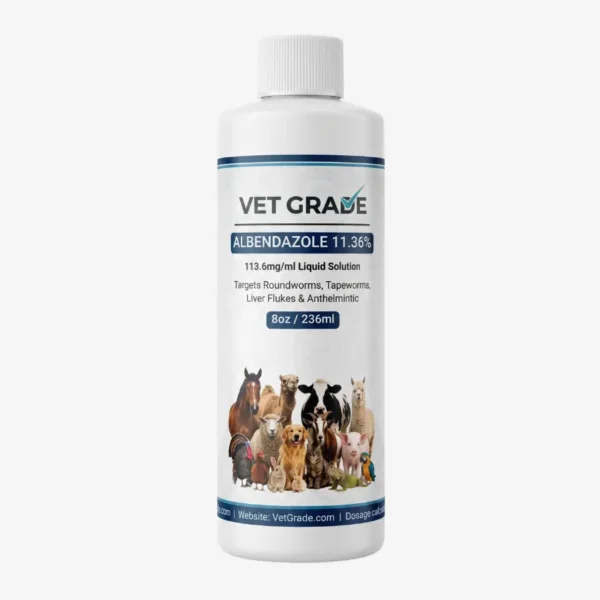
Albendazole Liquid Solution
$19.95 – $202.95Price range: $19.95 through $202.95
- Wide Species Coverage – Formulated for sheep, goats, cattle, pigs/swine, camels, alpacas, and horses.
- One of the Few Dewormers That Treats Liver Flukes – Clears adult Fasciola hepatica liver flukes in addition to common GI roundworms and tapeworms — most dewormers only handle the GI parasites.
- Addresses Key Symptoms – Helps with diarrhea, weight loss, anemia, poor coat condition, reduced appetite, and (with liver fluke specifically) “bottle jaw” swelling under the jaw.
- Easy Liquid Dosing – An 11.36% oral solution for accurate weight-based dosing with an oral syringe.
- Hassle-Free for Animals That Reject Tablets – A uniform liquid dose that goes down smoothly without spitting or waste.
- Vetgrade.com’s Top Quality – Every bottle of Vet Grade Albendazole is made for consistent potency you can dose with confidence.

More Products from This Brand
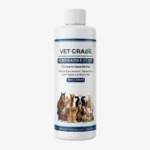
Albendazole Liquid Solution
$19.95 – $202.95Price range: $19.95 through $202.95
Description
Albendazole Liquid Solution is an 11.36% oral dewormer used in sheep, goats, cattle, pigs, camels, alpacas, and horses. It stands out from most other dewormers in our lineup because it treats liver flukes (Fasciola hepatica) in addition to the usual roundworms and some tapeworms — but only the mature, adult fluke stage, not the immature flukes still migrating through liver tissue. That’s why flukicide treatment is timed for roughly 90 days after expected exposure, giving the flukes time to mature into the stage albendazole can actually clear. Because it’s a ready-to-use liquid, Vetgrade.com’s Albendazole Solution is easy to dose accurately by weight with an oral syringe.
Animals It’s Used For
Cattle & Goats
Controls GI roundworms, some tapeworms, and adult liver flukes.
Sheep
Same general coverage as cattle and goats, at a somewhat lower labeled dose.
Pigs / Swine
Controls common GI roundworm species at standard doses; a separate, much higher, veterinarian-directed protocol exists for porcine cysticercosis (a specialized, public-health-relevant use, not routine deworming).
Camels & Alpacas
Used for general parasite control, though efficacy in camelids is reportedly less consistent than in cattle, sheep, and goats for some parasites (including certain tapeworms, some strongyles, and liver flukes) — work with a camelid-experienced veterinarian to confirm it’s the right tool for the parasite you’re targeting.
Horses
Used for GI roundworms, strongyles, and tapeworms at one dose level, and liver flukes at a somewhat higher dose — though albendazole isn’t the most commonly reached-for equine dewormer today, it remains an option, particularly where fluke treatment is needed.
Symptoms & Indications
GI Roundworm & Tapeworm Symptoms
- Diarrhea or loose stool
- Weight loss or poor growth
- Rough coat and general unthriftiness
- Reduced appetite
Liver Fluke Symptoms
- Progressive weight loss and anemia
- “Bottle jaw” — soft swelling under the jaw — in more severe cases
- Lethargy and poor coat condition
- Reduced milk production, growth rate, or wool/fiber yield
Many chronically infected animals show no obvious symptoms at all despite reduced productivity, which is part of why scheduled fluke treatment (rather than symptom-based treatment alone) is common in fluke-endemic areas.
Important Safety Note: Pregnancy Timing
Albendazole carries a specific, well-documented risk of fetal harm when given early in pregnancy, and manufacturer guidance is more precise here than with most other dewormers:
- Cattle: Do not administer during the first 45 days of pregnancy, or within 45 days after bulls are removed from the herd.
- Sheep: Do not administer during the first 30 days of pregnancy, or within 30 days after rams are removed from the flock.
- Goats, camelids, and horses: Specific day-based windows are less clearly published, but the same class-wide early-pregnancy risk applies — most veterinarians recommend the same general caution.
Timing treatments around breeding season, not just around symptoms, matters more with this product than with several others in our lineup.
Albendazole Liquid Solution Dosing Chart
> Doses below reflect commonly referenced veterinary ranges and are for general informational purposes. Always confirm exact dosing and treatment length with a veterinarian.
Cattle & Goats
| Dose | Schedule | mL per 100 lb (cattle) / per 10 lb (goats), 11.36% |
|---|---|---|
| 10 mg/kg (4.5 mg/lb) | Single dose (covers GI worms and adult liver flukes) | Cattle: 4.0 mL per 100 lb / Goats: 0.4 mL per 10 lb |
Sheep
| Dose | Schedule | mL per 10 lb body weight (11.36%) |
|---|---|---|
| 7.5 mg/kg (3.4 mg/lb) | Single dose | 0.3 mL |
Pigs / Swine
| Purpose | Dose | Schedule | mL per 10 lb body weight (11.36%) |
|---|---|---|---|
| Standard GI deworming | 10 mg/kg (4.5 mg/lb) | Single dose | 0.4 mL |
| Cysticercosis (specialized/vet-directed) | Up to 50 mg/kg | Single dose, or split over 3 days per vet protocol | 2.0 mL |
Camels & Alpacas
| Dose | Schedule | mL per 10 lb body weight (11.36%) |
|---|---|---|
| ~7.5 mg/kg (3.4 mg/lb) | Single dose | 0.3 mL |
Horses
| Purpose | Dose | Schedule | mL per 100 lb body weight (11.36%) |
|---|---|---|---|
| GI roundworms/strongyles/tapeworms | 7.5 mg/kg (3.4 mg/lb) | Single dose | 3.0 mL |
| Liver flukes | 10 mg/kg (4.5 mg/lb) | Single dose, may repeat after several weeks | 4.0 mL |
Dosing Instructions
- Shake the bottle thoroughly before each use to ensure a completely uniform solution.
- Weigh the animal (or use a recent known weight) for accurate dosing.
- Using a calibrated oral syringe, measure the exact fluid volume required.
- Administer directly into the side of the mouth, or mix thoroughly into feed or a small palatable portion that will be consumed immediately.
- For liver fluke treatment, time dosing to roughly 90 days after expected exposure so flukes have matured to the stage albendazole is effective against; retreatment several weeks later may be recommended by your veterinarian.
- Confirm the animal isn’t in early pregnancy (or within the post-breeding caution window) before dosing — see the safety note above.
- Consider fecal testing before and after treatment to confirm the parasite (roundworm vs. fluke) and verify the treatment worked.
FAQs
Can albendazole be used in pregnant animals? Not in early pregnancy — this is one of the more clear-cut restrictions among dewormers. Cattle should not be treated during the first 45 days of pregnancy (or within 45 days of bull removal), and ewes should not be treated during the first 30 days of pregnancy (or within 30 days of ram removal), due to documented risk of fetal harm. The same general caution is recommended for goats, camelids, and horses even though specific day windows are less clearly published for those species. Always confirm timing with your veterinarian relative to your breeding schedule.
Are there withdrawal periods for meat or milk? Yes. Cattle carry a 27-day meat withdrawal, and a milk withdrawal hasn’t been established — it shouldn’t be used in female dairy cattle of breeding age. Sheep and goats carry a 7-day meat withdrawal, and it shouldn’t be used in lactating does. Swine and camelid withdrawal data is less consistently published — check your specific product label and confirm with your veterinarian or FARAD before treating any food-producing animal.
Does this kill liver flukes at any stage, or just adults? Just the adult (mature) stage at the standard label dose. Immature flukes still migrating through the liver aren’t reliably cleared, which is why fluke treatments are typically timed around 90 days after expected exposure — giving the flukes time to mature into the stage the drug can actually reach.
My animal has no symptoms — do they still need fluke treatment? Possibly, especially in areas where liver fluke is common. Many infected animals show no obvious symptoms despite reduced milk, wool, or growth performance, and untreated animals continue to contaminate pasture. Scheduled, area-appropriate fluke treatment (not just symptom-triggered treatment) is standard practice in fluke-endemic regions.
Is it as effective in alpacas and camels as in cattle and sheep? Not entirely — some data suggests reduced or inconsistent efficacy in camelids against certain parasites, including some tapeworms, a few strongyle species, and liver flukes. A fecal exam before and after treatment is a good way to confirm it’s working for your specific herd.
Why does my vet time deworming around breeding season instead of just treating when I see symptoms? Because of the early-pregnancy risk described above. Treating a female that’s already in early pregnancy (or could be, depending on when breeding males were removed) is one of the more specific timing concerns with this drug compared to other dewormers.
How should it be stored, and what’s the shelf life? Store at room temperature, out of direct sunlight, tightly capped. Shake before each use. Discard if the solution changes color, smells off, or is past the expiration date on the bottle.
Note:
Doses reflect commonly referenced veterinary ranges and are for general informational purposes. Always confirm exact dosing and treatment length with a veterinarian.
Reviews
There are no reviews yet.