

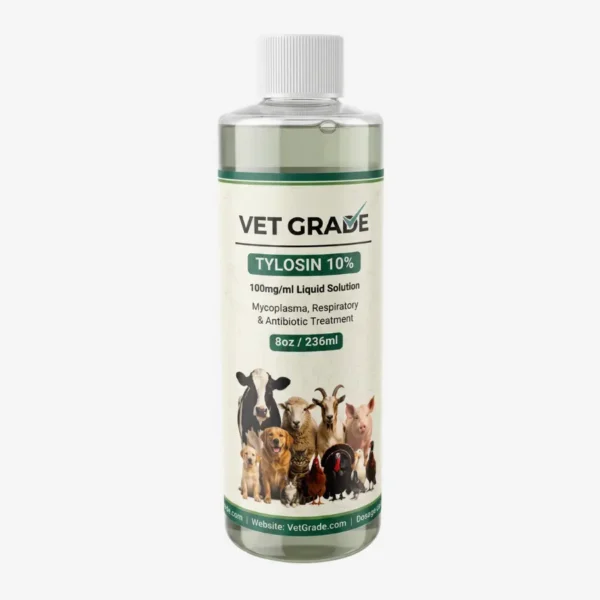
Tylosin Liquid Solution
$19.95 – $222.50Price range: $19.95 through $222.50
- Broad Species Use – Formulated for cattle, pigs/swine, chickens, turkeys, goats, sheep, dogs, and cats.
- Targets Bacterial Respiratory & GI Disease – A macrolide antibiotic effective against Mycoplasma and other susceptible bacteria causing respiratory infections in livestock and poultry, and against bacteria linked to chronic, antibiotic-responsive diarrhea in dogs and cats.
- Addresses Key Symptoms – Helps with coughing, nasal or eye discharge, labored breathing, fever, lethargy, reduced appetite, and (in dogs/cats) recurring loose stool.
- Easy Liquid Dosing – A 10% oral solution for accurate weight-based dosing with an oral syringe, or mixed into drinking water for flocks and herds.
- Palatable Flavor Options – Chicken, tuna, apple, vanilla, or unflavored for easier dosing across species.
- Vetgrade.com’s Top Quality – Every bottle of Vet Grade Tylosin is made for consistent potency you can dose with confidence.

More Products from This Brand
Tylosin Liquid Solution
$19.95 – $222.50Price range: $19.95 through $222.50
Description
Tylosin Liquid Solution is a 10% oral macrolide antibiotic used in cattle, pigs, chickens, turkeys, goats, sheep, dogs, and cats. It works by binding to the 50S ribosomal subunit of susceptible bacteria, blocking their ability to make proteins and reproduce, which gives the animal’s own immune system the opening it needs to clear the infection. In livestock and poultry, it’s best known for respiratory disease and Mycoplasma infections; in dogs and cats, it’s a well-documented option for chronic, recurring diarrhea that responds specifically to tylosin (often called tylosin-responsive diarrhea). Because it’s a ready-to-use liquid, Vetgrade.com’s Tylosin Solution is easy to dose accurately by weight with an oral syringe.
Animals It’s Used For
Cattle
Used for bovine respiratory disease and other susceptible bacterial infections.
Pigs / Swine
Used for swine pneumonia (including Mycoplasma hyopneumoniae), swine arthritis, and erysipelas.
Chickens & Turkeys
Used for chronic respiratory disease (CRD) and infectious sinusitis linked to Mycoplasma gallisepticum, typically dosed through drinking water for the flock.
Goats & Sheep
Used for susceptible bacterial respiratory infections, similar to cattle.
Dogs & Cats
Used off-label, and well-supported by clinical research, for chronic or recurring diarrhea that responds to tylosin — sometimes linked to Clostridium perfringens overgrowth — as well as certain respiratory and skin infections.
A Note on Horses
Horses are intentionally not included. Macrolide antibiotics like tylosin are specifically linked to severe, sometimes fatal colitis in adult horses by disrupting normal gut bacteria, so this class is generally avoided in that species.
Symptoms & Indications
Respiratory Disease Symptoms (Cattle, Swine, Goats, Sheep, Poultry)
- Coughing, nasal discharge, or (in poultry) foamy/bubbly eyes and swollen sinuses
- Labored or rapid breathing
- Fever
- Reduced appetite, lethargy, or falling behind the rest of the herd/flock
- In poultry specifically, reduced growth rate or egg production
Chronic/Recurring Diarrhea Symptoms (Dogs & Cats)
- Loose or watery stool that recurs or doesn’t fully resolve with diet changes
- Mucus in the stool
- Straining or increased frequency of defecation
- Otherwise generally healthy demeanor between flare-ups (a hallmark of tylosin-responsive diarrhea, as opposed to more systemic illness)
Important Safety Notes
This is an antibiotic, not an antiparasitic. Unlike the dewormers and coccidiostats in our lineup, tylosin only works against susceptible bacteria — it won’t help with worms, coccidia, or viral illness, and using it when it’s not needed contributes to antibiotic resistance over time. A veterinary diagnosis (or at least a strong clinical suspicion based on symptoms and history) helps ensure it’s the right tool for the problem.
Regulatory note: In the US, tylosin is one of the livestock antibiotics affected by FDA Guidance for Industry #263 (effective 2023), which shifted most previously over-the-counter livestock antimicrobials to prescription or Veterinary Feed Directive (VFD) status, requiring a veterinarian-client-patient relationship. Confirm current requirements for your state and species before purchase or use.
Not for horses, for the colitis-risk reasons noted above.
Tylosin Liquid Solution Dosing Chart
Doses below reflect commonly referenced veterinary ranges and are for general informational purposes. Always confirm exact dosing and treatment length with a veterinarian.
Cattle
| Dose | Schedule | mL per 100 lb body weight (10%) |
|---|---|---|
| 5–10 mg/kg (2.3–4.5 mg/lb) | Once daily, up to 5 days | 2.27–4.55 mL |
Goats & Sheep
| Dose | Schedule | mL per 10 lb body weight (10%) |
|---|---|---|
| 10 mg/kg (4.5 mg/lb) | Once daily, up to 5 days | 0.45 mL |
Pigs / Swine
| Dose | Schedule | mL per 10 lb body weight (10%) |
|---|---|---|
| 5–10 mg/kg (2.3–4.5 mg/lb) | Once daily, up to 3 days | 0.23–0.45 mL |
Chickens & Turkeys
| Purpose | Water Medication Rate (10%) | Schedule |
|---|---|---|
| Chronic respiratory disease / infectious sinusitis (*Mycoplasma*) | ~20 mL per gallon of drinking water | 1–5 days depending on severity (commonly 3 days) |
Target consumption is roughly 50 mg per lb of body weight per day for chickens and 60 mg per lb per day for turkeys — actual water intake varies with temperature and flock size, so adjust the water-medication rate accordingly or work with a poultry veterinarian to fine-tune it.
Dogs & Cats
| Purpose | Dose | Schedule | mL per 10 lb body weight (10%) |
|---|---|---|---|
| Initial treatment (chronic diarrhea) | 15–25 mg/kg (6.8–11.4 mg/lb) | Twice daily, often for several weeks | 0.68–1.14 mL |
| Long-term/maintenance (if tapering after response) | ~5 mg/kg (2.3 mg/lb) | Once daily, per vet guidance | 0.23 mL |
Dosing Instructions
- Shake the bottle thoroughly before each use to ensure a completely uniform solution.
- For individual dosing, weigh the animal and measure the exact fluid volume using a calibrated oral syringe, then introduce it gently into the side of the animal’s mouth, or blend it into a small portion of aromatic wet food.
- For flock or herd treatment, mix the required volume thoroughly into fresh daily drinking water, making sure it’s the sole water source for the treatment period.
- Don’t stop treatment early just because symptoms improve — finishing the full course (as directed by your veterinarian) helps prevent relapse and resistance.
- For dogs and cats being treated for chronic diarrhea, expect treatment courses to run several weeks, sometimes tapering to a lower daily dose once symptoms are controlled.
- Re-evaluate with your veterinarian if there’s no improvement within a few days — a different antibiotic class or a different diagnosis may be needed.
FAQs
Can tylosin be used in pregnant animals? It hasn’t been fully studied in pregnancy across all species, and the general guidance is caution rather than a clear “yes” or “no.” That said, macrolides as a class (which includes tylosin) are generally considered among the safer antibiotic classes to use during pregnancy compared to many alternatives, and animal studies haven’t shown clear reproductive harm at labeled doses. Still, confirm with your veterinarian before treating a pregnant or nursing animal.
Are there withdrawal periods for meat, milk, or eggs? Yes. Commonly cited figures include roughly 21 days meat withdrawal for cattle and swine, up to 42 days for sheep, about 5 days milk withdrawal for cattle (tylosin generally isn’t recommended for lactating dairy cattle at all), and around 3 days for eggs from treated laying hens. Goat and poultry-meat-specific figures are less consistently published — always check your specific product label and confirm with your veterinarian or FARAD before treating a food-producing animal.
Is this actually available without a prescription? As of 2023, FDA rules (Guidance for Industry #263) moved tylosin and most other previously over-the-counter livestock antibiotics to prescription or Veterinary Feed Directive status in the US, which generally requires an established relationship with a veterinarian. Requirements can vary by exact product and state — confirm current status before purchase.
Why isn’t this used in horses? Macrolide antibiotics, including tylosin, carry a specific and serious risk in adult horses: they can disrupt the horse’s gut bacteria enough to trigger severe, sometimes fatal colitis. This isn’t a minor side effect consideration — it’s a well-documented reason this drug class is generally avoided in that species.
My dog’s diarrhea comes back every time we stop the antibiotic — is that normal? It can be, with tylosin-responsive diarrhea specifically. Some dogs need a longer initial course, and some need an extended low-dose maintenance period rather than a short course, to keep symptoms controlled. This is a conversation to have with your veterinarian rather than something to manage by repeatedly restarting and stopping on your own.
Will this treat coccidiosis or worms too, since my animal has diarrhea? No — tylosin is an antibiotic that targets bacteria, not parasites. If coccidia or intestinal worms are the actual cause, one of our antiparasitic products (or a fecal test from your vet to confirm what’s actually going on) is the more appropriate next step.
Why does my vet want me to finish the whole course instead of stopping once symptoms clear? Stopping early is one of the more common contributors to antibiotic resistance and relapse — some bacteria can survive a partial course and come back stronger or less responsive to treatment next time. Finishing the full, correctly dosed course gives the best chance of fully clearing the infection.
How should it be stored, and what’s the shelf life? Store at room temperature, out of direct sunlight, tightly capped. Shake before each use. Discard if the solution changes color, smells off, or is past the expiration date on the bottle.
Note:
Doses reflect commonly referenced veterinary ranges and are for general informational purposes. Always confirm exact dosing and treatment length with a veterinarian.
Sources
- Tylan Soluble (tylosin tartrate) — Official FDA Label, DailyMed
- Mycoplasma gallisepticum Infection in Poultry — Merck Veterinary Manual
- Effect of tylosin on dogs with suspected tylosin-responsive diarrhea: a placebo-controlled, randomized, double-blinded, prospective clinical trial — PubMed Central
- FAQ: Understanding GFI 263 — Valley Vet Supply
Reviews
There are no reviews yet.